What I Wish I Knew Before My First USPSA Match

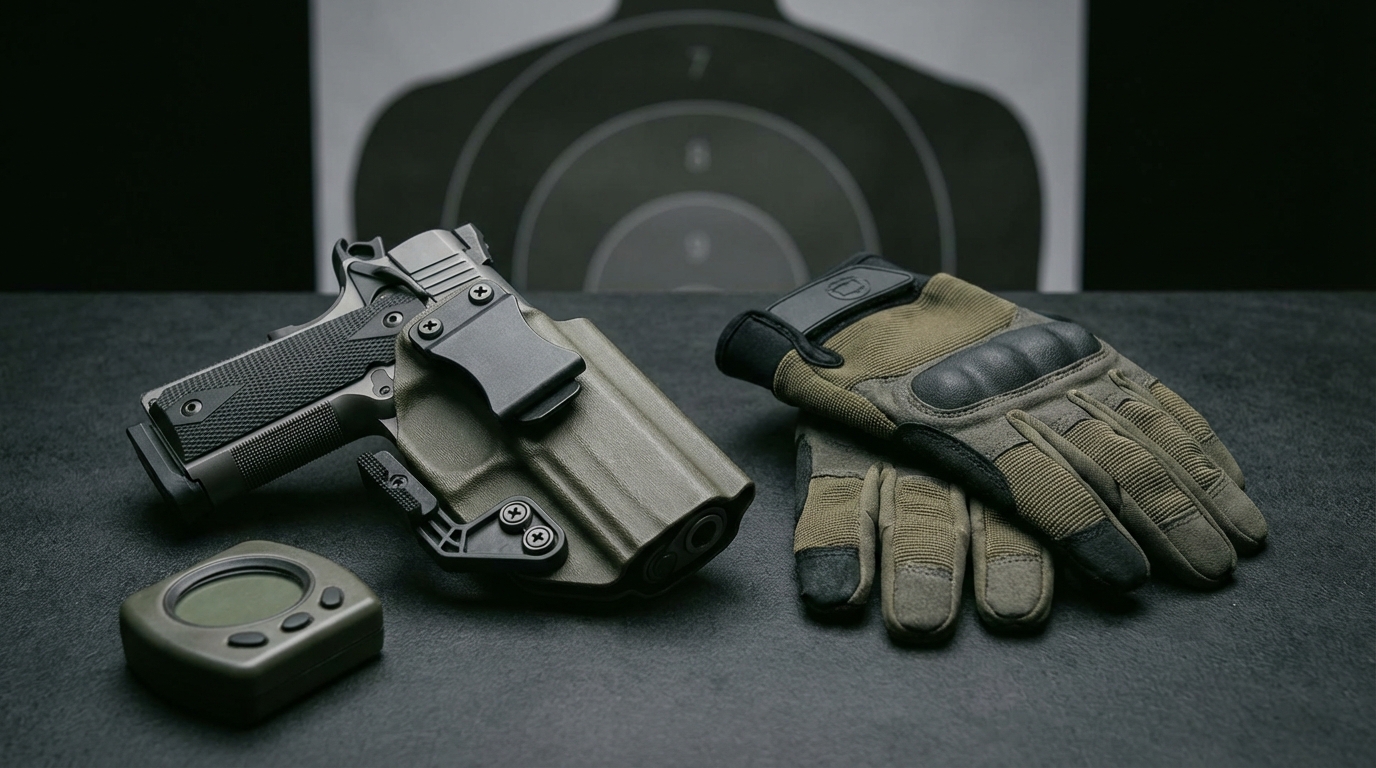
My first USPSA match was a humbling experience. I showed up thinking my range time had prepared me. It had not. I forgot gear, misunderstood the scoring, nearly got confused during a stage briefing, and spent half the day feeling like everyone else had a secret manual I never received. The good news is that none of it was complicated – I just did not know what to expect. This article covers everything I wish someone had told me before I walked onto that first bay. Whether you are shooting Production, Single Stack, or just showing up to see what the sport is about, this will save you some of the embarrassment I earned the hard way.
What Nobody Tells You Before Your First Match
Most people prep for their first USPSA match by practicing at a static range. That is useful, but it is not the same sport. USPSA requires you to move, think, and shoot at the same time – and the clock is always running.
The biggest surprise for most newcomers is the social dynamic. Experienced shooters are generally welcoming, but they are also busy running their own match. Do not expect hand-holding. Ask questions early, watch the shooters before you, and stay out of the way when you are not shooting. That alone will earn you more goodwill than any gear you show up with.
Quick Takeaways
- USPSA is a moving, thinking sport – not just a shooting test
- Experienced shooters are helpful but not babysitters
- Watch every stage run before it is your turn
- Ask your squad for help – most will give it
- Showing up prepared matters more than showing up with expensive gear
Gear That Actually Matters on Match Day
You do not need a race gun and a custom rig to shoot your first match. What you do need is gear that works reliably and stays out of your way. A pistol that runs clean, a holster that holds the gun securely at the right height, and magazine pouches that let you draw without fumbling – that is the baseline.
The gear that trips up first-timers most often is the holster. USPSA has specific rules about retention and carry position. A BOSS or equivalent level-one retention holster worn at the hip is a safe starting point for most divisions. If you are already shopping for holsters, look for features like adjustable cant, solid retention without a thumb break (for speed), and a design that covers the trigger guard completely. Magazine pouches matter too – single-stack pouches on a double-stack gun will ruin your day fast.
What to Have Ready
- Pistol cleaned and function-tested the day before
- At least three magazines (four is better)
- A sturdy belt – a dedicated gun belt makes a real difference
- Eye and ear protection (electronic muffs help you hear stage briefings)
- Comfortable shoes with ankle support – you will be moving on uneven ground
- Water and a snack – matches run long
How USPSA Scoring Trips Up New Shooters
USPSA uses a points-based scoring system called Comstock scoring for most stages. You earn points for where your shots hit on the target, and your raw score is divided by the time it took you to complete the stage. That ratio is your hit factor. Higher is better.
Here is what catches people off guard: a fast run with sloppy hits can score lower than a slightly slower run with clean A-zone hits. New shooters often rush because they feel the pressure of the clock. The smarter move is to shoot at a pace where you can call your shots. Also, missed targets carry a 10-point penalty each, and procedural errors cost you 10 points per occurrence. One missed steel popper can tank an otherwise solid stage.
| Hit Zone | Points |
|---|---|
| A zone | 5 pts |
| C zone | 4 pts |
| D zone | 2 pts |
| Miss | -10 pts |
| Procedural | -10 pts |
The Safety Rules That Can Get You DQ’d Fast
A DQ – or disqualification – ends your match immediately. There is no appeal, no second chance. You pack up and go home. USPSA safety rules exist for good reason, and the range officers enforce them consistently.
The three fastest ways to get DQ’d as a new shooter are: breaking the 180-degree rule (muzzle crosses an imaginary line behind the shooter), negligent discharge (a round fired unintentionally), and sweeping yourself or another person with the muzzle. All three usually happen because a shooter is moving fast and not thinking about muzzle direction. Slow down on movement, keep your finger out of the trigger guard until you are on target, and think about where the muzzle is pointing every single second. If you are unsure about a movement, ask the range officer before the stage starts – not during.
Stage Briefings – How to Not Look Lost
Before each stage runs, the range officer gives a stage briefing. This covers the start position, what targets are required, any special rules for that stage, and the course of fire. Pay attention. You will not get a repeat.
The part that confuses most new shooters is target engagement rules. Some stages require you to engage targets from specific shooting areas, or shoot them in a specific order. Others are “freestyle,” meaning you choose your own path. If you miss a required engagement, that is a procedural penalty. Walk the stage before your run, identify every target, and mentally rehearse your path. Ask a squadmate how they plan to shoot it – most will tell you, and it helps you build a plan without starting from scratch.
Common Mistakes First-Timers Make Every Time
Most first-match mistakes are not about shooting skill. They are about preparation and awareness.
Common mistakes to avoid:
- Forgetting a spare magazine – three is the minimum, four is safer
- Wearing the wrong holster – a duty holster with level-three retention will slow you down and may not be legal in your division
- Not loading magazines the night before – fumbling with ammo at the match wastes time and adds stress
- Ignoring the stage walk – walking the stage is not optional, it is how you build your plan
- Rushing the draw – a fumbled draw costs more time than a slow, clean one
- Finger in the trigger guard during movement – this is how DQs happen
- Not knowing your division rules – Production, Limited, Carry Optics, and others have different equipment rules
- Skipping breakfast or water – matches run three to five hours, sometimes longer in summer heat
Quick Checklist Before You Leave the House
Print this out or screenshot it. Check it the night before and again the morning of the match.
- [ ] Pistol cleaned, lubed, and function-tested
- [ ] Magazines loaded and counted (minimum three)
- [ ] Holster and mag pouches mounted on belt and tested
- [ ] Eye protection and electronic ear muffs packed
- [ ] Match fee cash ready (many clubs do not take cards)
- [ ] Comfortable, closed-toe shoes with ankle support
- [ ] Water bottle and snack
- [ ] USPSA membership card or confirmation number
- [ ] Ammo count – check the stage round counts ahead of time and bring extra
- [ ] Phone charged for the match app if your club uses one
FAQ – First USPSA Match Questions Answered
Do I need a USPSA membership before my first match?
Most clubs allow one or two “guest” matches before requiring membership. Check with your specific club ahead of time. Membership is worth it if you plan to shoot more than once.
What division should I shoot as a beginner?
Production is the most popular starting point. The rules are straightforward, equipment requirements are minimal, and you will have plenty of competition at your level. Carry Optics is also growing fast and friendly to new shooters.
How much ammo do I need?
A typical club match runs six to eight stages with around 150 to 200 rounds total. Bring 250 to be safe. Running dry mid-stage is not a good look.
Can I use my carry gun?
Yes, in most cases. Just confirm it meets the rules for your chosen division and that your holster is competition-legal. Some carry holsters with high retention levels will slow you down significantly.
What if I make a safety mistake?
If it is a DQ-level violation, the range officer will stop you immediately. If it is a procedural error, you finish the stage and take the penalty. Either way, learn from it and move on – every experienced shooter has a story.
Is USPSA expensive to get into?
The entry cost is moderate. If you already have a pistol and a basic holster setup, your main costs are match fees (usually $20-$30 per club match) and ammo. You do not need to spend money on gear upgrades until you know what you actually want to change.
Your first USPSA match will not be perfect – mine certainly was not. But it will teach you more about practical shooting in one afternoon than months of static range sessions. The sport rewards preparation, smart movement, and consistent fundamentals far more than expensive gear. Show up with a clean gun, a legal holster, enough magazines, and a willingness to ask questions. Watch the shooters ahead of you, listen to the range officers, and focus on safe muzzle discipline above everything else. The scores do not matter much your first time out. Getting comfortable with the format and making it through without a DQ – that is a solid first match. Everything else improves from there.