One Iron Sight Hunt a Year Makes Me a Better Shot

Every fall, I see the same thing. My buddies are chasing the latest high-magnification scope, a new ballistic turret, or some miracle cartridge that promises to add another hundred yards to their effective range. I get it-gear is fun. But for me, the most important hunt of the year involves taking all that technology off my rifle. Once a season, I set aside my scoped bolt-action and grab a rifle wearing nothing but a simple set of iron sights. It’s usually for a whitetail doe hunt in familiar woods, not a once-in-a-lifetime mountain goat tag. This isn’t about being a purist or proving a point. It’s a deliberate training exercise that forces me back to the core fundamentals of marksmanship, and without fail, it makes me a better, more confident shooter for the other 364 days of the year.
Why One Iron Sight Hunt Sharpens My Skills
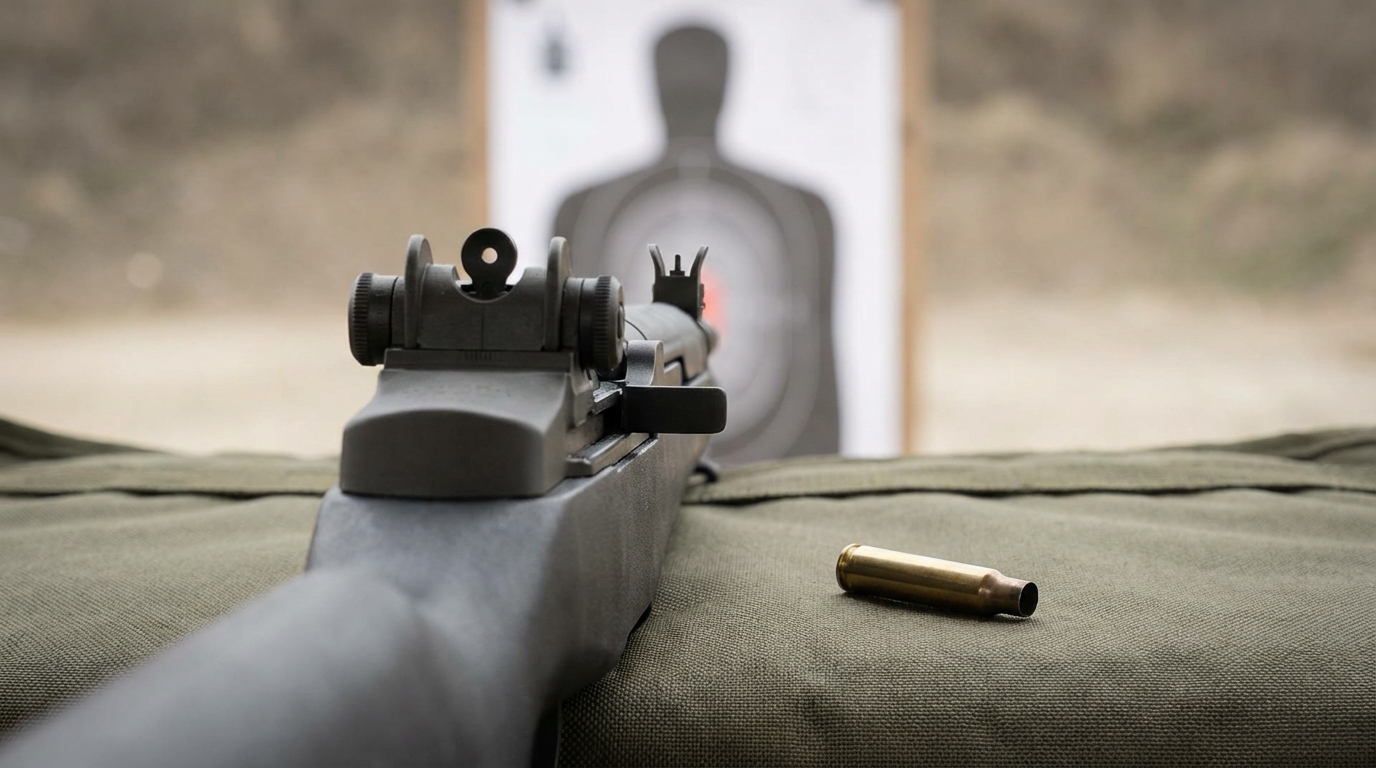
Hunting with iron sights is a master class in fundamentals. When you look through a 10x scope with a forgiving eye box and a crisp reticle, you can get away with a lot of small mistakes. A little wobble, a slightly inconsistent cheek weld, or a rushed trigger press might still result in a good hit. Irons are not so forgiving. They demand perfect sight alignment-the relationship between the front and rear sight-and a perfect sight picture-the alignment of those sights on your target. Any error is magnified downrange. It forces you to slow down, control your breathing, and execute a clean, surprise trigger break every single time. There is no technology to lean on; it’s all on you.
This annual tradition also makes me a better hunter by forcing me to master fieldcraft and range estimation. Without a laser rangefinder or a ballistic reticle, I have to rely on my own two eyes and my knowledge of the terrain. I have to know what 100 yards looks like through the trees, and what 150 yards looks like across a clearing. This forces me to get closer, to use the wind and cover to my advantage, and to be more patient. It’s a humbling reminder that hunting is as much about woodsmanship as it is about marksmanship. Knowing my absolute maximum effective range with irons-and sticking to it-is the ultimate exercise in ethical discipline.
Setting Up Your Rifle for an Irons-Only Hunt
The right rifle for this job is often one you already own. A classic lever-action like a Winchester 94 or Marlin 336 is a natural choice, as are many older bolt-action rifles that came with excellent factory sights. Even a standard AR-15 equipped with a quality set of backup iron sights (BUIS) can be a fantastic option. The key is that the rifle itself is mechanically accurate and that the sights are sturdy and repeatable. You don’t need a custom-built rifle; you need a reliable tool that you know inside and out. The goal is to focus on your skills, not to fight with your equipment.
Once you’ve chosen your rifle, the zeroing process is critical. Unlike a scope with turret adjustments for distance, your iron sight zero needs to be more versatile. I recommend zeroing for a Maximum Point-Blank Range (MPBR). This means setting your sights so the bullet never rises or falls outside of a predetermined vital zone (say, 6-8 inches for deer) out to its maximum effective range. For a common cartridge like the .30-30 Winchester, a 100- or 150-yard zero will keep you in the vitals out to around 175 yards without needing to hold over or under. Confirm your zero from field positions-not just a bench-to ensure it’s practical for real-world hunting scenarios.
What to Look For in Good Hunting Iron Sights
When it comes to iron sights, you generally have two options: traditional open sights or aperture (peep) sights. Open sights, like the buckhorn style found on many lever-actions, consist of a rear notch and a front post or bead. They are simple and rugged but can be less precise, as your eye has to focus on three things at once: the rear sight, the front sight, and the target. Aperture sights, on the other hand, use a rear ring (the peep) that your eye naturally centers the front post in. Your brain does most of the work, allowing you to focus solely on the front sight and the target. For this reason, I find aperture sights to be faster and more accurate for most hunting situations.
If you are upgrading your rifle’s sights, look for a few key features. First, prioritize durability-steel construction is almost always better than aluminum or polymer for a primary hunting sight. Second, ensure they are easily and reliably adjustable for both windage and elevation, with clear, positive clicks. Finally, consider visibility. A front sight with a fiber optic insert or a bold white line can make a world of difference in the dim light of dawn or dusk. A good set of aftermarket peep sights from brands like Skinner Sights or Williams Gun Sight can transform an old rifle into a highly effective hunting tool.
Pre-Hunt Range Work: It’s Not Like Scopes
Your practice sessions for an iron sight hunt need to be different from your typical pre-season sight-in. The bench rest is only for establishing your initial zero. After that, spend 90% of your time shooting from practical field positions: standing, kneeling, sitting, and braced against a tree or post. The wobble you control behind a scope becomes much more pronounced with irons, so building stability in these positions is non-negotiable. I also practice “snap shots” on a large target at 25-50 yards, bringing the rifle up from a low-ready and firing as soon as I have an acceptable sight picture. This builds the muscle memory needed for a quick, close-range opportunity.
The most important part of your range work is practicing at unknown distances. Set up targets at various ranges and force yourself to estimate the distance before you shoot. This will quickly teach you your personal limits. You also need to understand your trajectory. With an MPBR zero, you should know exactly where your bullet will hit at 50, 100, 150, and 200 yards. A simple chart taped to your stock or memorized can be invaluable.
.308 Win 150gr Trajectory (100-Yard Zero)
| Range (Yards) | Drop (Inches) |
|---|---|
| 50 | +0.6 |
| 100 | 0.0 |
| 150 | -2.2 |
| 200 | -6.3 |
| 250 | -12.8 |
Note: This is an example. Always verify your own rifle’s trajectory.
Stalking and Shooting Without Magnification
Hunting without magnification fundamentally changes your approach in the woods. You can’t sit on a ridge and scan a distant hillside. You must become an active participant, using terrain and wind to close the distance. This is where the challenge becomes rewarding. You’ll find yourself paying more attention to animal sign, learning to move more quietly, and developing a much deeper understanding of the area you’re hunting. The goal is no longer just to find an animal; it’s to get within your ethical iron sight range, which for me is typically inside 150 yards. This process of stalking makes the harvest far more satisfying.
When it’s time to take the shot, the fundamentals you honed at the range take over. Your mantra should be: front sight, front sight, front sight. Your eye can only focus on one plane at a time, and it must be the front sight. The target and the rear sight should be slightly blurry. Control your breathing, find a stable rest if possible, and apply slow, steady pressure to the trigger until the shot breaks. There’s no “dialing” or “holding for wind” in the same way as long-range shooting. It’s pure, foundational marksmanship under pressure.
Quick Pre-Shot Checklist
- Range: Is the animal well within my maximum ethical range?
- Target: Is it a clear, broadside or quartering-away shot?
- Backstop: Is the area behind the target safe?
- Stability: Am I in the most stable shooting position I can achieve?
- Sight Picture: Am I focused on the front sight, placing it on the vital zone?
- Breathing: Have I taken a breath and let half of it out?
- Trigger: Am I ready to press straight back smoothly?
How This Makes Me a Better All-Around Shot
After a week of hunting with only iron sights, picking up my scoped rifle feels like cheating. My hold seems unnaturally steady. The trigger feels lighter and crisper. My ability to build a stable position quickly is dramatically improved. This is because the iron sight hunt strips away all the technological crutches and forces my body and mind to relearn what it takes to be truly stable and precise. These skills don’t disappear when I put a scope back on the rifle; they translate directly, making me a more capable marksman with any firearm.
The confidence this builds is immense. I know that if my expensive scope fogs up, loses its zero from a fall, or its battery dies, my hunt isn’t over. I have the fundamental skills to remove it and continue with my backup irons. This mental edge is invaluable, especially on a backcountry hunt where failure isn’t an option. The iron sight hunt is a diagnostic tool that exposes my weaknesses and a training regimen that corrects them, paying dividends across every shooting discipline I participate in, from hunting to competition.
Quick Takeaways
- Reinforces Fundamentals: Forces perfect sight alignment, trigger control, and follow-through.
- Improves Fieldcraft: Teaches you to get closer and rely on stalking skills.
- Builds Confidence: Proves you can be effective without relying on optics.
- Enhances Scoped Shooting: The stability and control you learn with irons directly translate to better shooting with a scope.
- Promotes Discipline: Forces you to understand and respect your ethical shooting limits.
Common Iron Sight Hunting Mistakes to Avoid
I’ve made most of these mistakes myself over the years. Learning from them will save you a lot of frustration and, more importantly, can prevent a lost or wounded animal.
- Not Practicing Enough: Thinking you can just pick up an iron-sighted rifle and be effective is a huge mistake. It’s a perishable skill that requires dedicated range time.
- Focusing on the Target: This is the number one error. Your focus must be on the front sight post. If the front sight is sharp and the target is a little blurry, you’ll hit it. If the target is sharp and the front sight is blurry, you’ll miss.
- Overestimating Your Effective Range: Ego is a dangerous thing. Be brutally honest about the maximum distance at which you can guarantee a clean, ethical kill. For most, this is under 200 yards, and often closer to 100-150.
- Using Inadequate Sights: Flimsy, non-adjustable, or hard-to-see factory sights will set you up for failure. A small investment in quality aperture or fiber optic sights can make a massive difference.
- Failing to Confirm Zero: Just like a scope, iron sights can get bumped during travel. Always fire a few confirmation shots when you get to camp to ensure your zero is still true.
Your Iron Sight Hunting Questions Answered
What is a realistic maximum range for hunting deer with iron sights?
This depends entirely on the shooter, the rifle’s accuracy, and the cartridge. For me, with a rifle I know well and from a solid field position, 150 yards is my comfortable limit. I might stretch it to 200 on a calm day at a perfectly broadside, stationary target, but that’s the absolute edge. For a beginner, I’d recommend keeping all shots inside 100 yards.
Are peep (aperture) sights really better than open sights?
In my experience, yes, for most people. The peep sight works with your eye’s natural tendency to center objects in a circle, making it faster to align and more precise. It allows you to focus on the front sight and the target, which is a more intuitive system than trying to align a front bead in a rear notch.
Can I use the backup iron sights (BUIS) on my AR-15 for hunting?
Absolutely. A quality set of folding or fixed iron sights on an AR can be very effective, provided you’ve practiced with them. The key is to know your rifle’s trajectory and understand any necessary holdovers, as many are zeroed for 50/200 or 100 yards, which may differ from a traditional hunting zero.
How do you handle low-light situations with iron sights?
This is the biggest disadvantage compared to a scope. Iron sights are very difficult to use in the first and last few minutes of legal shooting light. A fiber optic front sight helps immensely by gathering ambient light. Ultimately, you have to accept this limitation and plan your hunt accordingly, perhaps by focusing on areas that get better light early in the morning or late in the afternoon.
Committing to one iron sight hunt a year isn’t about making things harder for the sake of it. It’s an investment in your own skills. It’s a diagnostic tool that reveals your flaws and a training program that fixes them. It will make you a better stalker, a more disciplined marksman, and a more confident hunter overall. So next season, consider leaving the high-tech glass at home for just one hunt. Pick up that old lever gun or dust off the iron sights on your bolt-action. Go back to the basics. I guarantee that the lessons you learn in those woods will stick with you long after the hunt is over, making you a better shot with any rifle you pick up.