How I Tightened My Groups 40 Percent in 2 Months

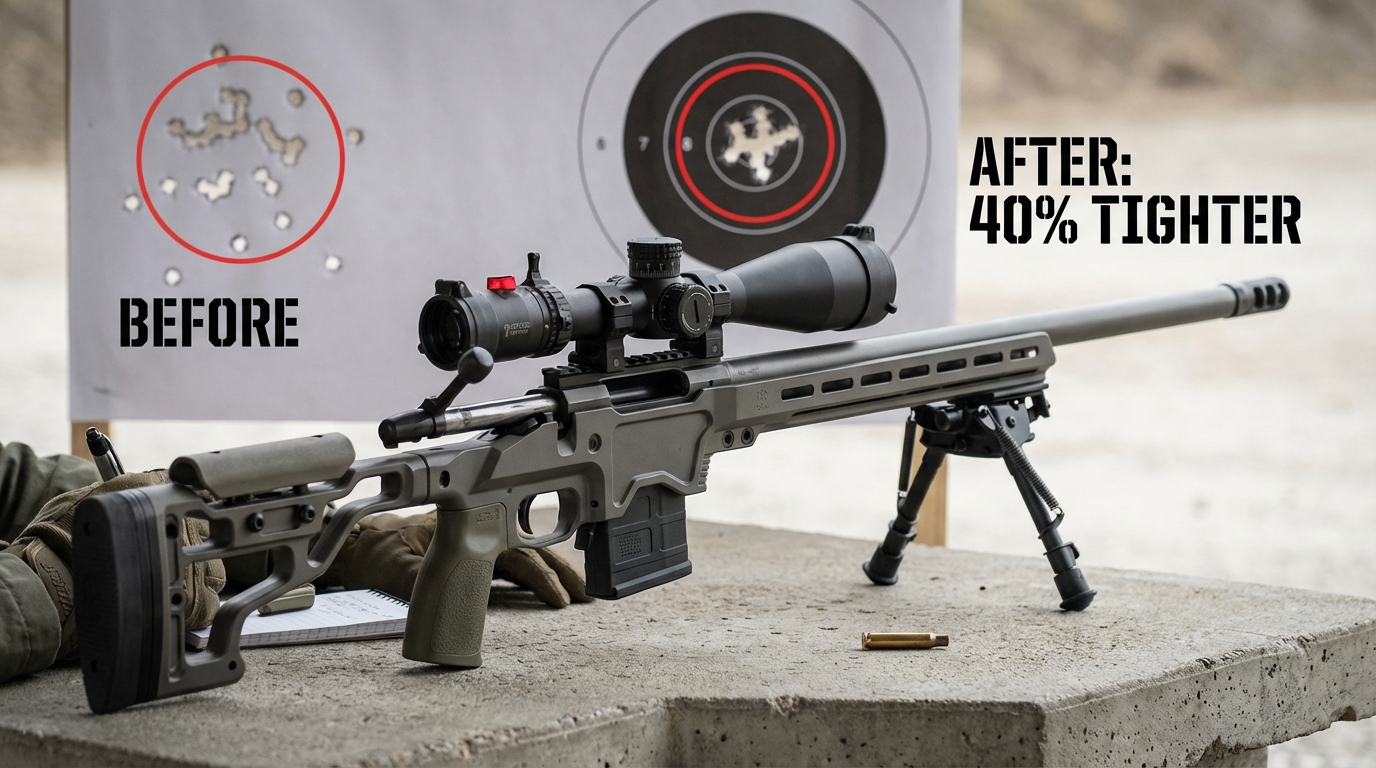
Two months ago, I was throwing shots all over the paper at 25 yards and making excuses about my ammo. Spoiler: it was not the ammo. After a frustrating range session where I could not keep five shots inside a paper plate, I decided to stop guessing and actually diagnose what was going wrong. No coach, no expensive class – just honest self-assessment and a repeatable process. What followed was a measurable 40 percent reduction in my average group size across three different handguns. This article breaks down exactly what I changed, in the order I changed it. If you are a self-taught shooter who has plateaued, this is the practical breakdown I wish someone had handed me years ago.
What Was Actually Wrecking My Groups at First
I spent way too long blaming external factors – the trigger, the sights, the light, the wind. The truth is that most accuracy problems at the 10-to-25-yard range come down to shooter error, not equipment. Once I accepted that, things started to move in the right direction.
The first thing I did was shoot from a rest. I put my pistol on a sandbag, fired five rounds, and watched the group tighten up dramatically. That told me the gun was capable – I was the variable. From there, I started filming my grip and trigger pull with my phone propped on a range bag. Watching the footage back was humbling, but it was the fastest diagnostic tool I have ever used.
The Grip Fix That Made the Biggest Difference
My grip was inconsistent shot to shot, and I did not even realize it until I watched the footage. I was rotating the gun slightly inward with my strong hand on every trigger press – a classic symptom of a grip that is too loose or too far back on the backstrap.
The fix was straightforward. I moved my strong hand higher on the grip, made sure the web of my hand was pressing firmly into the backstrap, and locked my support hand thumbs forward with real pressure – not just resting there. I also stopped gripping harder right before the shot, which was causing the muzzle to dip. Grip pressure should be consistent throughout the entire firing sequence, not spiked at the break.
Quick checklist – grip fundamentals
- High, firm strong hand grip with web pressed into backstrap
- Support hand wrapping with 60-70 percent of total grip pressure
- Thumbs pointed forward, not stacked
- No grip tightening right before or during trigger press
- Consistent hand placement every single draw or pickup
- Wrists locked, not limp
How I Diagnosed My Trigger Pull Problems
A trigger pull diagnostic target – sometimes called a “bullseye diagnostic chart” – is one of the most useful free tools available. You print it out, shoot at the center, and the location of your misses tells you exactly what you are doing wrong. Low left for a right-handed shooter almost always means anticipating the shot and pushing the muzzle down.
My problem was a combination of anticipation and a staged trigger pull. I was pre-loading the trigger before I was ready, then rushing the break. I fixed this by slowing everything down in dry fire and practicing pressing through the trigger without any mental “countdown.” The goal is that the shot should almost surprise you – not because you are jerking the trigger, but because you are pressing smoothly until it breaks.
The Dry-Fire Routine I Did Every Single Night
I dry-fired for 15 minutes every night for six weeks. That sounds tedious, but it is genuinely the highest return-on-investment practice you can do. No ammo cost, no range fees, and you can isolate exactly the skills you need to fix.
Always verify the chamber is empty and remove all live ammunition from the room before any dry-fire session. That is non-negotiable. My routine was simple and consistent:
- 5 minutes – draw and press out to a wall target at 10 feet
- 5 minutes – trigger press only, watching the front sight for movement
- 5 minutes – one-handed shooting (strong side, then support side)
I used a small adhesive dot on the wall as my target. If the front sight moved at the break, I noted it and repeated. After about two weeks, I started seeing real carryover at the range. The trigger press became automatic rather than something I had to consciously manage.
Ammo Consistency – Why I Stopped Ignoring It
I reload my own ammo, so I thought I had this covered. I was wrong. I was loading to a consistent powder charge but not paying close enough attention to overall cartridge length or bullet seating consistency. Small variations were causing velocity spreads that showed up as vertical stringing on the target.
I started measuring every tenth round with a caliper and sorting my brass by headstamp. I also ran a chronograph for the first time in years and was surprised to see a 45 feet-per-second extreme spread in what I thought was consistent ammo. Tightening that spread to under 20 fps made a visible difference in vertical dispersion at 50 yards.
Ammo consistency – what to look for
If you are shooting factory ammo rather than reloads, the same principles apply. Look for ammo with:
| Factor | What to Look For |
|---|---|
| Velocity consistency | Low extreme spread (under 25 fps is solid) |
| Bullet seating | Consistent OAL across the box |
| Brass quality | Uniform headstamps from reputable manufacturers |
| Lot matching | Shoot from the same lot number for testing |
How I Tracked Progress Without Overthinking It
I kept a simple range notebook – nothing fancy. After every session, I recorded the group size in inches for my best five-shot group and my average five-shot group. I also noted the distance, the gun, and anything I was working on that day. That is it.
Tracking your average group is more useful than tracking your best group. Your best group can be a fluke. Your average tells you where your skills actually are. After eight weeks, I had a clear trend line showing steady improvement, which was motivating enough to keep the dry-fire habit going. If you prefer digital, a notes app works just as well – the format matters less than the consistency.
Quick takeaways
- Track average groups, not just your best shots
- Dry fire beats live fire for building trigger discipline
- Grip inconsistency is the most common hidden problem
- Ammo variation shows up as vertical stringing – chronograph it
- Filming yourself at the range is free and brutally honest
- Progress takes weeks, not days – trust the process
Common Mistakes That Stall Your Accuracy Gains
These are the patterns I see most often – including in my own shooting before I fixed them.
- Skipping the diagnostic step. Shooting more without knowing what you are fixing just reinforces bad habits.
- Changing too many things at once. Fix one variable per session or you will not know what helped.
- Inconsistent practice. Three hours on Saturday does less than 15 minutes every night.
- Ignoring support hand pressure. Most shooters under-grip with the support hand and over-grip with the strong hand.
- Buying gear to solve a skill problem. A new trigger will not fix anticipation. A new sight will not fix a flinch.
- Giving up on dry fire because it feels boring. Boring is fine. Boring works.
- Shooting too fast during practice. Speed is a product of good mechanics, not the goal of early practice sessions.
FAQ – Tightening Groups Without Hiring a Coach
How long does it take to see real improvement?
Most shooters see measurable group improvement within three to four weeks of consistent dry fire and focused live-fire practice. Significant improvement – 30 to 40 percent – typically takes six to eight weeks.
Do I need special equipment to diagnose my problems?
No. A phone camera, a sandbag rest, and a free diagnostic target printout are enough to identify 90 percent of common accuracy problems.
Is dry fire safe for my firearm?
Most centerfire pistols and rifles handle dry fire without issue. If you are concerned, snap caps are inexpensive and eliminate any worry. Always check your owner’s manual first.
What if my groups are already decent – is there still room to improve?
Yes. The same process applies at any level. The diagnostic step will show you what the next limiting factor is, whether that is trigger timing, follow-through, or ammo consistency.
Can this work for rifles and shotguns, not just handguns?
The grip, trigger, and dry-fire principles translate directly to rifles. Shotgun patterns are a different discussion, but trigger discipline still matters for slug accuracy.
Do I need to shoot a lot of rounds to improve?
Not necessarily. Quality repetitions beat volume. Fifty focused rounds with a clear goal will outperform 200 rounds of casual shooting almost every time.
Forty percent sounds like a big number, but it came from small, consistent changes – not a single breakthrough moment. Fix the grip, clean up the trigger press, dry fire every night, and pay attention to your ammo. None of this costs much. Most of it costs nothing. The shooters who improve fastest are not the ones who buy the most gear – they are the ones who are honest about what is actually going wrong and patient enough to fix it one piece at a time. If you take one thing from this article, let it be the diagnostic step. Figure out what is actually broken before you try to fix anything. Everything else follows from there.